

Looking at growth promoters through a different lens

“Sometimes we just need a new angle to see things.” This simple quote by Derek Balkman offers a mindset that applies perfectly to how the food animal production industry should approach natural alternatives to antibiotic growth promoters.
As the industry has transitioned toward more responsible antibiotic use, including a growing demand for antibiotic-free production, new challenges have emerged, resulting in a significant impact on animal health, welfare and performance. This has forced the industry to seek alternatives that can help mitigate challenges such as necrotic enteritis and other bacterial diseases.
A new angle
Most efforts have focused on finding antibiotic replacements, products with similar properties to antibacterials, but we need to take a “new angle” to address this need effectively. A fresh approach should adopt a holistic view, rather than focusing solely on pathogenic bacterial organisms that impact health and performance. This broader approach should also prioritise protecting and supporting the cells of the intestinal tract and the immune system. A healthy gut and a robust immune system enhance the animal’s ability to prevent pathogens from invading intestinal epithelial cells and the circulatory system, thereby reducing the risk of infection.
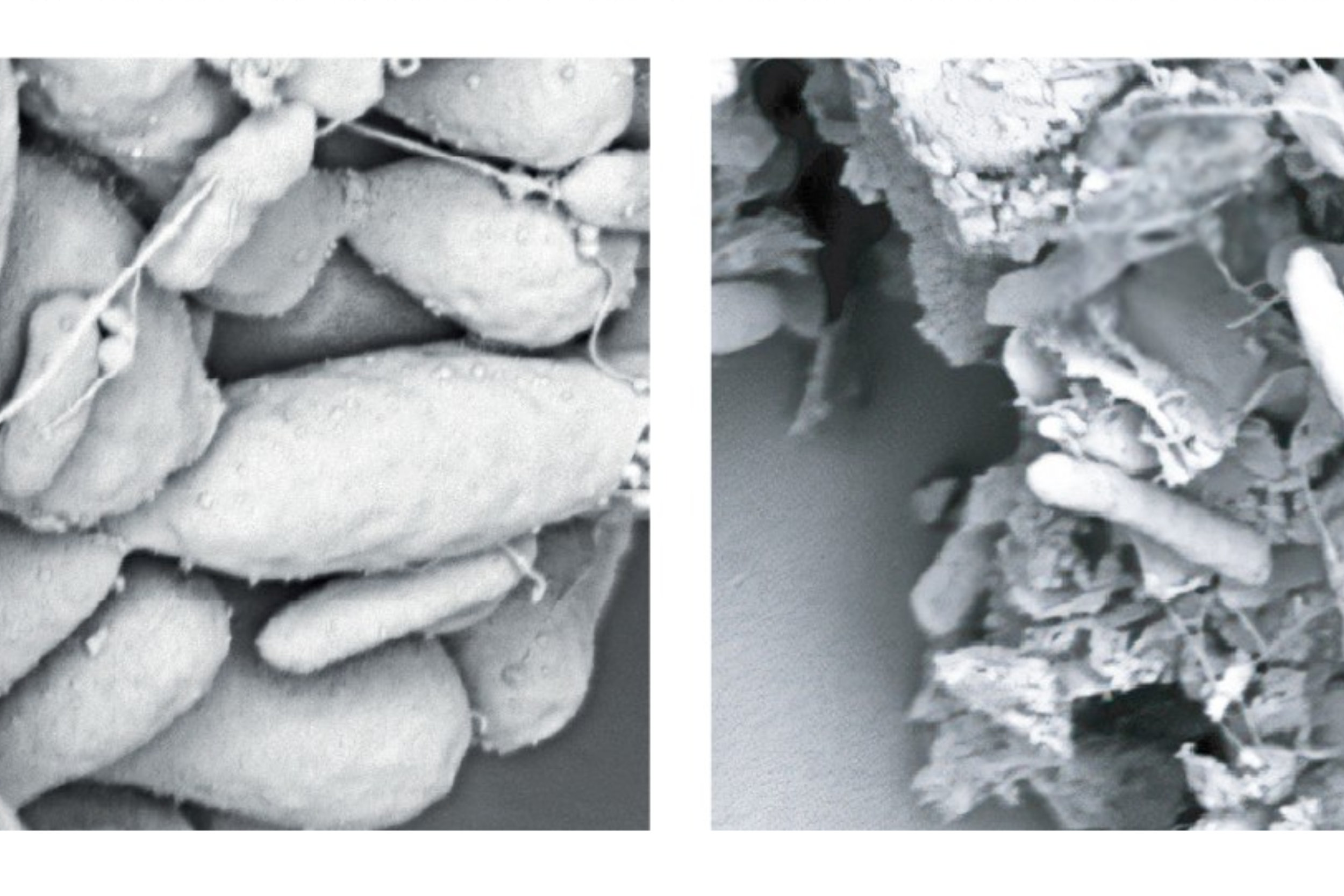
Figure 1 – Salmonella adhering to surfaces of whole yeast cells (pichia) and calcium montmorillonite.

Varium
For any AGP or AGP-replacement product to be effective, it must specifically target pathogenic bacteria. Traditional or commonly used natural products can effectively protect against pathogens due to their bactericidal properties. However, many act via broad-spectrum action and thus can also target beneficial bacteria. Pathogens such as Clostridium perfringens, Salmonella spp., and Escherichia coli use fimbriae to adhere to the intestinal enterocytes. A product like Varium (Amlan International), which contains a proprietary, thermally processed calcium montmorillonite, can bind the fimbriae of these bacteria (Figure 1), reducing their presence in the intestine (Table 1). This reduction in pathogenic load enables beneficial bacteria, such as Lactobacillus, to thrive with less competition from other microbes.
Maintaining a more balanced intestinal microbiota is essential for improving gut health. It supports the digestion of feed, facilitates the synthesis of nutrients such as vitamins and short-chain fatty acids, enhances nutrient absorption, and ultimately improves overall animal health and performance.
Pichia yeast ingredient
As part of a more holistic approach to pathogenic management, Varium contains a proprietary whole Pichia yeast ingredient that further enhances the bacterial-binding properties of the clay, providing an additional layer of targeted support for gut health. The whole Pichia yeast cells can also provide much-needed support and enhancement of the immune system with a high concentration of two key components of their cell wall: mannan-oligosaccharides (MOS) and beta-glucans. MOS actively binds to receptors on the surfaces of certain pathogenic bacteria, preventing them from attaching to the epithelial cells of the intestines. This additional binding affinity plays a crucial role in reducing the pathogen load in the gut, thereby allowing beneficial bacteria to thrive in a less competitive environment (Table 1).
In addition, beta-glucans from the yeast component add to the holistic approach of treatment by moderating the natural immune response of the animal. An unbalanced immune response to a disease challenge consumes a substantial amount of energy, diverting it away from weight gain and other performance parameters.
Thus, supporting and enhancing the animal’s immune system to combat disease challenges is a critical component of Varium’s approach to managing bacterial enteritis. Beta-glucans are effective at modulating immunity by activating immune cells and increasing phagocytic cell action. This function not only helps increase the rate at which pathogenic bacteria are removed from the intestines, but it also enhances the response to vaccinations used for disease control.
Supporting enterocytes
A third component when managing bacterial enteritis involves supporting enterocytes, which will inevitably sustain damage during a disease challenge. Toxins released by pathogenic bacteria degrade the integrity and function of the intestinal barrier, reducing overall animal performance. Not only will the thermally processed mineral component of Varium efficiently bind these toxins, but the inclusion of glutamic acid also plays an active role in numerous processes that support optimal gut health and function.
Figure 2 – Impact on gut morphology.

It is the preferred energy source utilised by enterocytes for cell repair, rapid cell replication, maintaining epithelial tight junctions, and enhancing the health and integrity of the intestinal mucosa. Helping to replenish and restore damaged enterocytes minimises the adverse effects caused by bacteria and mycotoxin challenges alike (Figure 2). This prevents the systemic spread of these pathogens, avoiding performance-diminishing side effects such as leaky gut and ultimately diarrhoea — while promoting optimal nutrient absorption and thereby improving performance, health, and well-being. Backed by over 10 years of animal trials, research shows Varium enhances both feed conversion and weight gain (Figures 3 and 4). Boosting these metrics is crucial for maximising production efficiency for producers worldwide.
Figure 3 – 28-Day old broiler weight following a necrotic enteritis challenge.

Figure 4 – 28-Day old broiler fcr following a necrotic enteritis challenge.

Holistic approach
Through synergistic actions, Varium offers a holistic and sustainable approach to managing bacterial enteritis, as opposed to relying solely on antibiotics.