• Dairy
    • Breeding
    • Calves
    • Milking
    • Blogs
  • Health & Nutrition
    • Health
    • Nutrition
    • Hoof health
  • Industry & Markets
    • Market trends
    • Smart farming
    • Global dairy market prices
  • World of Dairy
    • Country focus
    • Farm visits
    • Best practices
    • Special editions
  • Videos
  • Webinars
  • Newsletter
  • Digital magazine
  • Our sites
    • All About Feed
    • Poultry World
    • Pig Progress
    • Future Farming
  • Login/Register
  • Subscribe
  • Outbreaks
  • Videos
  • Seminars
  • Webinars
  • Digital magazine
  • Newsletter
  • Subscribe
  • loginlogout
  • Dairy Global
  • Dairy
    • Calves
    • Breeding
    • Milking
    • Blogs
  • Health/Nutrition
    • HPAI in US
    • Health Tool
    • Health
    • Nutrition
    • Hoof health
    • Mastitis
  • Markets
    • Smart farming
    • Market trends
    • Interviews
    • Global dairy market prices
  • World of Dairy
    • Farm visits
    • Country focus
    • Best practices
    • Cows & climate
    • Special editions
    • Blogs
  • Our sites
    • All About Feed
    • Poultry World
    • Pig Progress
    • Future Farming
  • Logout
Gateway to the global dairy industry

Calves

In new housing proposals for calves, EFSA allocates 20 square metres per calf for social behaviour and play. Research from Utrecht indicates that calves do not need that much space throughout the entire day. Photo: Mark Pasveer
07-05 | News

How much space do calves need for social interaction and play?

Despite a long period without milk, calves fed more still prioritised playing. Photo: Jan Willem van Vliet
30-04 | News

Better fed calves are more motivated to play

As dairy farms face increasing pressure to improve productivity while meeting animal welfare and sustainability expectations, metabolic programming offers a promising approach. Photo: Trouw Nutrition
10-04 | News

Calf-centric nutrition to shape calf health and boost productivity

While it is desirable that at least 70% of calves score above 18 IgG, the average IgG content in the Royal GD Colostrum Intake Check was 23 IgG Photo: Bertil van Beek
07-04 | News

The Netherlands: 82% of calves have good colostrum intake

Achieving high milk production requires tight farm management, which impacts all aspects of the business. Photo: Mark Pasveer
06-04 | Article

How better management leads to lower calf mortality in the Netherlands

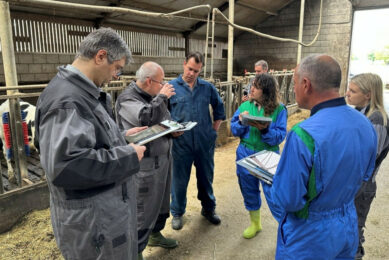
Biosecurity assessment in practice. Pictured is a visit to William Nillesen’s dairy farm in the Netherlands – an excellent example of strong calf-level biosecurity, with a continuous focus on improvement. Photo: Huvepharma
19-03 | Partner

Calf Secure: A new digital platform to strengthen biosecurity in calf rearing

To combat heat stress, calves can be fed more calories to support energy for growth by increasing milk solids or milk volume, which will boost immune function and help calves cope better. Photo: Mark Pasveer
25-02 | News

Beat the heat: How to keep calves cool and avoid heat stress

By translating LifeStart science into a practical on-farm solution, Sprayfo Ultimo enables dairy farmers to apply a calf-centric, nature-inspired approach without increasing management complexity, supporting stronger calves today and more resilient, productive cows tomorrow. Photo: Trouw Nutrition
26-01 | Partner

Rethinking restricted feeding in dairy calves

For consumers, a calf with a cow is an ideal situation. For farmers, it presents challenges in terms of housing, health, and business economics. Much research is still needed to achieve the 2040 target for keeping more calves with cows. Photo: Mark Pasveer
12-01 | Article

Keeping calves with cows: Success possible but questions remain

In the Netherlands, there is a debate about raising the transport age of calves. While dairy and veal farming sectors want to maintain the current 14 days, the government wants to raise the age to 28 days in 2028. Photo: Henk Riswick
02-01 | News

28-day-old calves perform no better than younger calves

Navigatie

1 2 … 13 next
Cows & climate

Carbon

Research suggests that extending the grazing season by just one week can reduce ammonia emissions by 3.5%. Photo: Koos Groenewold
09-01-2025 | Article

How refocused management can reduce ammonia emissions in dairy farming

Peter Lauwers, CEO of GEA Farm Technologies. Photo: Mark Pasveer
19-01-2023 | News

GEA: Dairy cow manure solution takes off

For more articles on cows & climate...

Special editions

Focus topics
  • Hoof health
  • Cows & climate
  • Best practices
  • Seminars – EuroTier
Products
  • Webinars
  • Events
  • Digital magazine
  • Newsletter
  • Our content partners
Social
  • LinkedIn
  • Facebook
  • Twitter
  • YouTube
  • Instagram
Services
  • Contact
  • Advertising
  • Our sites
Newsletter

"*" indicates required fields

This field is for validation purposes and should be left unchanged.
Misset Uitgeverij B.V. Copyright reserved.
The following rules apply to the use of this site: Terms of Use, Privacy Policy and Cookie Policy.