

The ripple effect: How one efficient parlour impacts global hunger

Drop a small stone into a still pond. The immediate splash is highly localised; it seems like an isolated event. But watch the surface closely and you will see concentric rings expand outward, carrying the kinetic energy of that single, small impact all the way to the distant shore. The global dairy industry operates on this exact same principle, though the stakes are infinitely higher.
When you stand in the pit of a milking parlour at 4 o’clock in the morning, the world can feel incredibly small. The physical boundaries of the farm seem to be the edges of the universe. Your focus is understandably narrowed to the immediate reality: the rhythmic clicking of the pulsators, the rush of milk surging through the stainless-steel metres, the smell of iodine and damp earth, and the shifting weight of the cow standing quietly above you. In the dark hours of the early morning, it is incredibly easy to view the dairy farm as a solitary island of production.
But from where I stand, observing dairy operations and supply chains worldwide, I see a much wider, deeply interconnected reality. The dairy farm is not an island; it is the vital epicentre of a global nutritional supply chain. Every single decision made regarding the mechanical efficiency of your parlour creates a ripple effect that ultimately crashes against one of the greatest and most urgent challenges of our generation: global food security.
We often discuss parlour efficiency in terms of local, immediate economics. We talk about saving a few cents per litre to improve the margin. Today, however, we need to elevate that conversation. We must step back and understand how the mechanical precision of a single milking unit directly influences our collective ability to feed a hungry, rapidly growing planet.
The true cost of mastitis
To truly understand this macro, global impact, we must first look intimately at the biological micro-level. As a veterinarian, nothing frustrates me more, and nothing feels more fundamentally wrong, than the sight of milk swirling down the parlour drain.
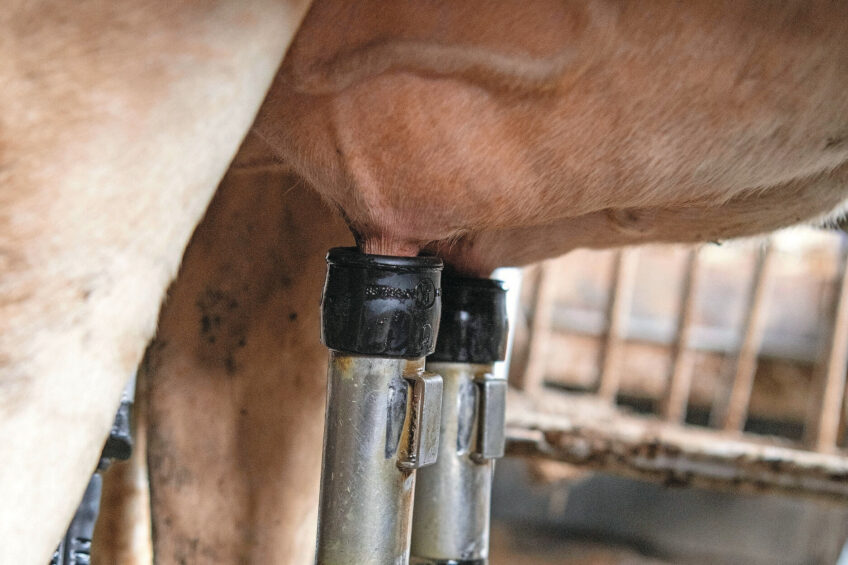
When a milking system is poorly calibrated or when an ill-fitting, aged liner aggressively damages the delicate tissue of the teat end, the cow’s natural defenses are physically compromised and the doorway for pathogens is thrown wide open. The inevitable biological result is machine-induced mastitis.
From a local farm management perspective, clinical mastitis is viewed primarily as a painful financial blow. It is a line item on the loss column, measured in veterinary bills, replacement costs, and lost daily yield. But from a global, humanitarian perspective, it is a moral tragedy.
The milk produced during antibiotic treatment, and throughout the mandatory withdrawal period that follows, must be discarded. When you aggregate this loss, the numbers are staggering. According to global agricultural estimates, millions of litres of highly nutritious protein are flushed into waste systems every single day simply due to mechanical and environmental under-health issues.
Think of those discarded litres not as lost revenue, but as stolen nutrition. They represent millions of glasses of milk, hundreds of thousands of kgs of cheese, and countless bags of infant formulas that simply vanished. When we invest in precise, gentle milking technology that respects the biomechanics of the teat, we drastically reduce the incidence of machine-induced mastitis. We are not just saving the farm’s profit margin; we are literally rescuing tonnes of vital nutrition from the drain and keeping it in the human food chain where it belongs.
Feed conversion and inflammation
The ripple effect of parlour efficiency extends far beyond the milk itself; it travels backward, deep into the soil and the resources of the planet.
Producing a single litre of milk requires a massive investment of planetary resources. Think of what goes into a daily ration: the millions of gallons of fresh water drawn from aquifers, the acres of arable land dedicated to forage, the nitrogen and phosphorus fertilisers applied to the soil, and the thousands of gallons of diesel fuel required to plant, harvest, and transport that feed to the bunk.
When a cow is healthy, comfortable, and milked efficiently, she acts as a miraculous biological engine. A ruminant is one of nature’s greatest marvels, capable of taking raw, inedible inputs – like cellulose from grass and silage – and converting them into highly digestible, human-edible protein with remarkable elegance and efficiency.
However, when a cow is chronically stressed by an inefficient parlour, her metabolism fundamentally shifts. She moves from a state of ‘production’ to a state of ‘survival’. Her immune system forcefully activates, and this immune response is incredibly energetically expensive. It demands a massive share of her daily dietary energy just to fight the inflammation.
This means the premium, resource-heavy feed we laboured so hard to grow is no longer being used to produce milk for the world; it is being burned by the cow simply to heal tissue damage caused by a poorly maintained machine. By optimising the parlour interface, we directly optimise the cow’s feed conversion ratio. We ensure that the precious resources invested in her diet are translated into food, rather than being wasted on internal biological repairs.
The global mathematics of scale
This dynamic is critical everywhere, regardless of the farming philosophy or geography. The mathematics of scale applies universally. The mechanical interface between the cow and the machine remains the common denominator.
As the global population climbs relentlessly toward the 10 billion mark by the year 2050, the demand for high-quality dairy protein is exploding. This is particularly true in emerging markets across the globe, where the middle class is rapidly expanding. For these families, dairy is often the very first high-quality animal protein they integrate into their daily diets as their income rises.
We simply cannot create more arable land to meet this booming demand; we cannot sustainably clear more forests or drain more wetlands to plant more feed. We must, therefore, extract significantly more value from the land we already farm. We must verticalise our efficiency.
A 1% increase in milking efficiency on a large-scale dairy translates to thousands of additional litres of milk per day, harvested with the exact same carbon footprint, the same water usage, and the same land mass. But efficiency does more than just increase sheer volume; it fundamentally lowers the base cost of production. When an efficient parlour uses less electricity, requires less labour per litre, and keeps cows healthy and in the milking string for 4 or 5 lactations instead of 2, the underlying cost to produce that milk drops significantly.
This is the ultimate, most profound ripple effect: lower production costs at the farm level eventually translate to more affordable, price-stable dairy products on the supermarket shelf. By making our parlours smarter, our vacuum systems more responsive, and our equipment gentler, we actively democratise nutrition. We make essential, life-sustaining proteins accessible to lower-income demographics worldwide who might otherwise be priced out of the dairy market by food inflation.
Conclusion: The farmer as a global guardian
It is time to reframe how we view the dairy farmer, the veterinarian, and the technology they utilise every day. The parlour is not merely a factory floor, and the equipment inside it is not just hardware. It is the vital, frontline infrastructure of global public health and nutrition.
Every time a farm manager takes the time to calibrate a regulator to stabilise vacuum, every time a technician replaces a set of rubber liners before they microscopically degrade, and every time a dairy invests in upgrading to a low-energy, high-precision pulsator, they are throwing a stone into the pond.
You are actively reducing global waste. You are respecting the soil, the fuel, and the water that grew your feed by ensuring it is converted to food rather than fighting inflammation. You are lowering the economic cost of protein. You are ensuring that a child in a rapidly growing city halfway across the world has reliable access to a glass of milk, a slice of cheese, or a bowl of yogurt.
Efficiency is not just a corporate buzzword about maximising a farm’s bottom line. Efficiency is the dairy industry’s most powerful, practical, and compassionate weapon against global hunger. When you milk your cows with precision, empathy, and intelligence, the ripples travel outward, and the whole world eats a little better.
References available upon request.
Join 13,000+ subscribers
Subscribe to our newsletter to stay updated about all the need-to-know content in the dairy sector, two times a week.



