

French lumpy skin disease infections continue to rise
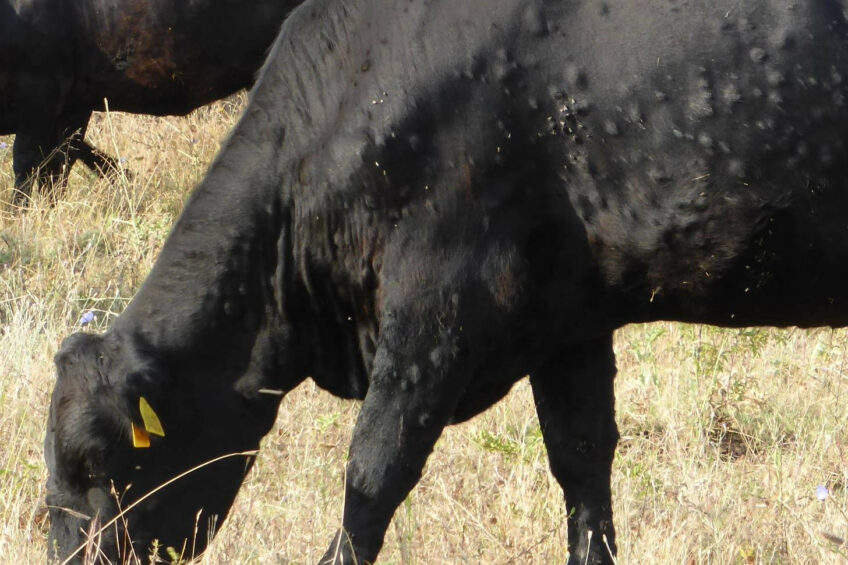
The number of infections of lumpy skin disease in France is still rising, albeit at a slow pace.
Since its first discovery in June, 107 cases of lumpy skin disease have been recorded in the country. The latest report involves cow vaccinated against lumpy skin disease in the Doubs region, about 25 kilometres north of the Jura Mountains, where 7 cases have been reported. This infection is located 330 kilometres south of Luxembourg.
Aggressive virus, culling
Lion Malfroy, chairman of the regional farmers’ organisation for animal health, stated in the French press that the animal could have become infected because it takes 21 days for the vaccine to become fully effective. Furthermore, it takes some time for the infection itself to manifest after exposure.
“This virus is very aggressive. Although the other cows don’t appear to be affected, we can’t say they’re healthy,” said Malfroy. The farm in question, with its 83 animals, has therefore been completely culled, despite resistance from the farmer himself and dozens of colleagues.
Steady increase
In the French border region with Spain, the number of lumpy skin disease infections has steadily risen to 19. On the Spanish side, the Ministry of Agriculture has revised the number downward by 1 to 17 due to a “false alarm”.
In the Savoie region in southeastern France, where lumpy skin disease first appeared, no new infections have been discovered for weeks, and all protection zones have now been lifted. These zones are still in place in the Jura and Doubs, making it impossible for the farmers’ union Coordination Rurale to bring cows from the now snow-covered mountain pastures to their barns.
Bluetongue and Epizootic Hemorrhagic Disease
Regarding other livestock diseases, France has so far recorded 17,714 cases of bluetongue type 3. The first 10,813 were reported between the arrival of the BTV3 virus from Belgium on 5 August 2024 and 1 June 2025, while a further 6,901 new infections have been recorded since then. The vast majority of new reports are occurring in Brittany and neighbouring regions in western France.
Furthermore, the French appear to have Epizootic Hemorrhagic Disease under control, due to an intensive and targeted vaccination campaign. After 3,906 new cases of Epizootic Hemorrhagic Disease were reported up to 1 June 2025, only 4 new infections have been detected since then.
Source: Boerderij



