Hungarian feed mills boost cattle output as industry stabilises
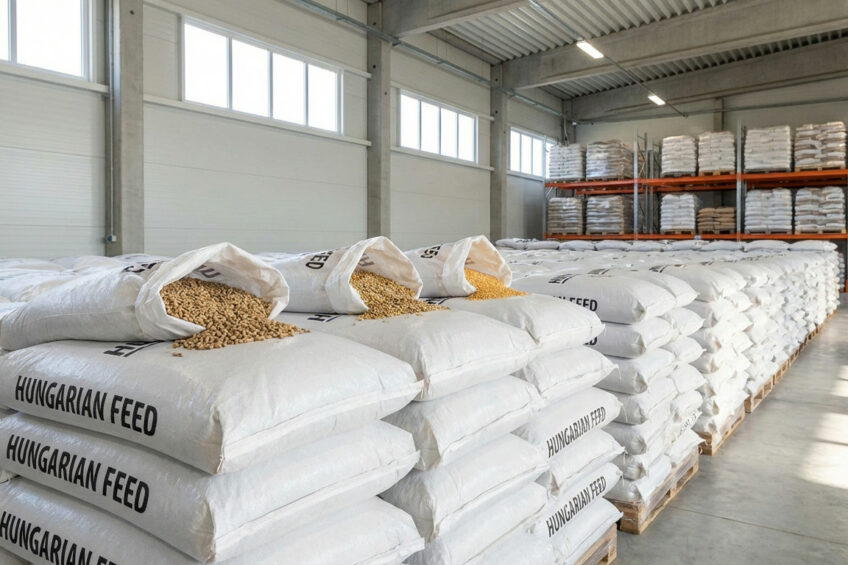
After a sharp downturn in 2022 and uneven performance in 2023, Hungary’s feed industry has embarked on a steady path to recovery, reports the Budapest-based Institute of Agricultural Economics. Interesting to note that cattle feed production climbed 2.3% in 2024 over the previous year.
In 2024, Hungarian feed mills manufactured 3.8 million tonnes of feed, 4.1% more than the previous year, the institute’s analysts calculated.
A mix of challenges
Over the past several years, Hungarian feed manufacturers have been on a rollercoaster, facing numerous challenges such as food inflation, a jump in grain prices due to a persistent drought, and a surge in electricity costs as a result of the Ukrainian war.
However, some improvements are already visible to the naked eye. Low raw material costs and a decrease in the price of borrowed funds have bolstered investment activity in the industry, the analysts noted.
- Cattle feed rose by 2.3% in 2024 compared to 2023
- Broiler feed climbed by 5.1%
- Duck feed production rose by 10%
- Laying hens, feed production inched down by 3.5%
- Turkey feed dropped by 10.7%
- Goose feed by 16.8%
- Pig feed production rose by 10.3%
Price swings ended
Hungarian feed comprises roughly 61% grain, 13.9% protein crops, and 8.1% oilseeds, the analysts estimated.
One of the key achievements of the last year was that price fluctuations on the feed market have become moderate. According to the researchers, the changes between consecutive quarters in 2024 were limited to 4%, whereas in 2023 they were close to 10%.
Positive trade balance
In 2024, Hungary saw a 23% rise in feed exports, the analysts said, without providing concrete figures. Imports, on the contrary, have shrunk compared with the previous year, resulting in a favourable foreign trade balance in the industry. The 3 largest target markets for exported goods were Romania, Croatia, and Slovakia.
Consolidation level stays the same
Hungarian feed industry maintains a relatively high level of consolidation. In 2024, the 5 largest feed manufacturers produced 1.25 million tonnes of feed, accounting for 32.9% of total output. This corresponds to the average level of the last several years, the analysts added.
Join 13,000+ subscribers
Subscribe to our newsletter to stay updated about all the need-to-know content in the dairy sector, two times a week.