Iran’s feed crisis deepens, threatening dairy industry stability and food security
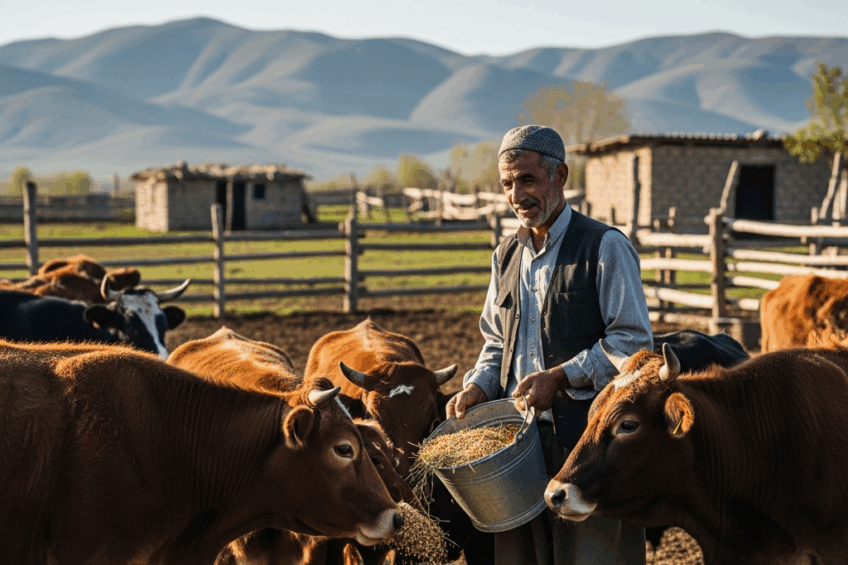
A sharp drop in feedstuff availability in recent months has triggered a new price hike on the feed market, driving the profitability of most poultry and livestock production into the red.
Iran has experienced a sudden drop in the availability of feedstuff distributed through a government-controlled system over the last several months, Mansour Pourian, the head of the country’s Livestock Supply Council, told Mizan Online, a local news outlet.
Feed prices double nationwide
On average, farmers purchase feedstuffs through the state system at 13,000 Iranian toman per kg. With a sharp drop in supplies, the farmers were forced to source feedstuff on the open market for 23,000 tomans per kg, Pourian added. One Iranian toman is equal to US$0.000024, though several exchange rates are currently in use in the country.
Producers face potential shutdown
“The drastic increase in prices has rendered production unviable and pushed many farmers to the brink of shutting down their operations,” Pourian lamented. He added: “It has become tough even for large producers to continue their activities.”
The problem has already attracted the attention of the top Iranian officials.
During a Supreme Council meeting, Hojjatoleslam Walmuslimin Gholamhossein Mohseni Ejei, the head of the Iranian judiciary, called for a close look into the reasons for this problem. He warned that national food security was on the line due to the feed shortage.
Distribution system proves unreliable
Over the last several years, Iranian farmers have consistently complained about the availability of feedstuffs.
The Iranian government imposes price caps on key food staples to keep food inflation in check. In exchange, it offers feedstuff through a centralised distribution system at prices nearly 50% lower than those in the open market. However, the system proved unreliable, regularly experiencing supply disruptions.
Grain output drops significantly
To some extent, this year’s problem can be attributed to a drop in Iranian grain production. According to a recent USDA report, Iran’s grain production dropped by 2.5 million tonnes to 13.5 million tonnes in the last financial year.
With domestic consumption estimated at 16.95 million tonnes, the gap widened to a record 3.4 million tonnes. Barley production declined by 100,000 tonnes to 2.3 million tonnes, leaving the domestic market short by around 2.3 million tonnes.
According to Tabnak, a local news outlet, the growing deficit has made the Iranian feed market more vulnerable. The publication, in particular, warns of a barley deficit, which is primarily used to feed livestock and poultry, and emphasises that this will drive up production costs for meat, chicken, and eggs in Iran.
Join 13,000+ subscribers
Subscribe to our newsletter to stay updated about all the need-to-know content in the dairy sector, two times a week.